ZoomInfo: Features, Benefits, and How It Helps Businesses Grow
 Rajesh Patel


 Rajesh Patel
In today’s competitive business environment, finding the right customers and connecting with the right decision-makers are essential for sustainable growth. Businesses need reliable information, effective marketing strategies, and efficient sales processes to stay ahead of competitors. ZoomInfo is a business-to-business (B2B) go-to-market intelligence platform designed to help organizations achieve these goals through business data, contact insights, and automation.
By bringing company information, professional contact details, and buying signals together, ZoomInfo helps sales and marketing teams identify potential customers, prioritize opportunities, and develop more focused outreach strategies. It enables businesses to make data-driven decisions and improve the efficiency of their customer acquisition efforts.
ZoomInfo is a B2B intelligence platform that provides businesses with information about companies, professionals, and potential buyers. It supports sales, marketing, revenue operations, and recruitment teams by helping them identify relevant prospects and understand their target markets.
The platform offers company profiles, professional contact information, organizational insights, technology information, and purchasing intent signals. These resources help businesses understand which organizations may be suitable customers and which decision-makers they should approach.
Rather than relying entirely on manual research, teams can use ZoomInfo to discover prospects, organize lead lists, enrich existing customer records, and connect business information with their existing workflows. Its integration capabilities also help organizations incorporate intelligence into their customer relationship management (CRM) and marketing systems.
One of the major advantages of ZoomInfo is its extensive database of businesses and professionals. Users can search for potential customers based on factors such as industry, company size, geographic location, job title, and department.
This information helps sales representatives identify relevant contacts and reach decision-makers more efficiently. By reducing the time spent researching prospects manually, businesses can dedicate more resources to relationship building and sales conversations.
Generating qualified leads is a priority for most B2B organizations. ZoomInfo supports lead generation by helping teams identify companies that match their ideal customer profiles.
Sales professionals can use available company attributes and contact details to create targeted prospect lists. This approach helps teams concentrate on relevant opportunities rather than spending time on a broad audience with limited potential.
With better prospect information, sales representatives can personalize their outreach and develop conversations that are more relevant to a prospective customer’s business needs.
Marketing teams can use ZoomInfo to support account-based marketing (ABM), a strategy that focuses on selected high-value companies rather than targeting every potential buyer equally.
By analyzing company characteristics and available intent signals, marketers can identify promising accounts and tailor campaigns to specific audiences. This can support more relevant messaging, better coordination between sales and marketing, and more focused demand-generation activities.
When used alongside campaign analytics, ZoomInfo can help marketing teams evaluate their targeting strategies and identify opportunities to improve engagement.
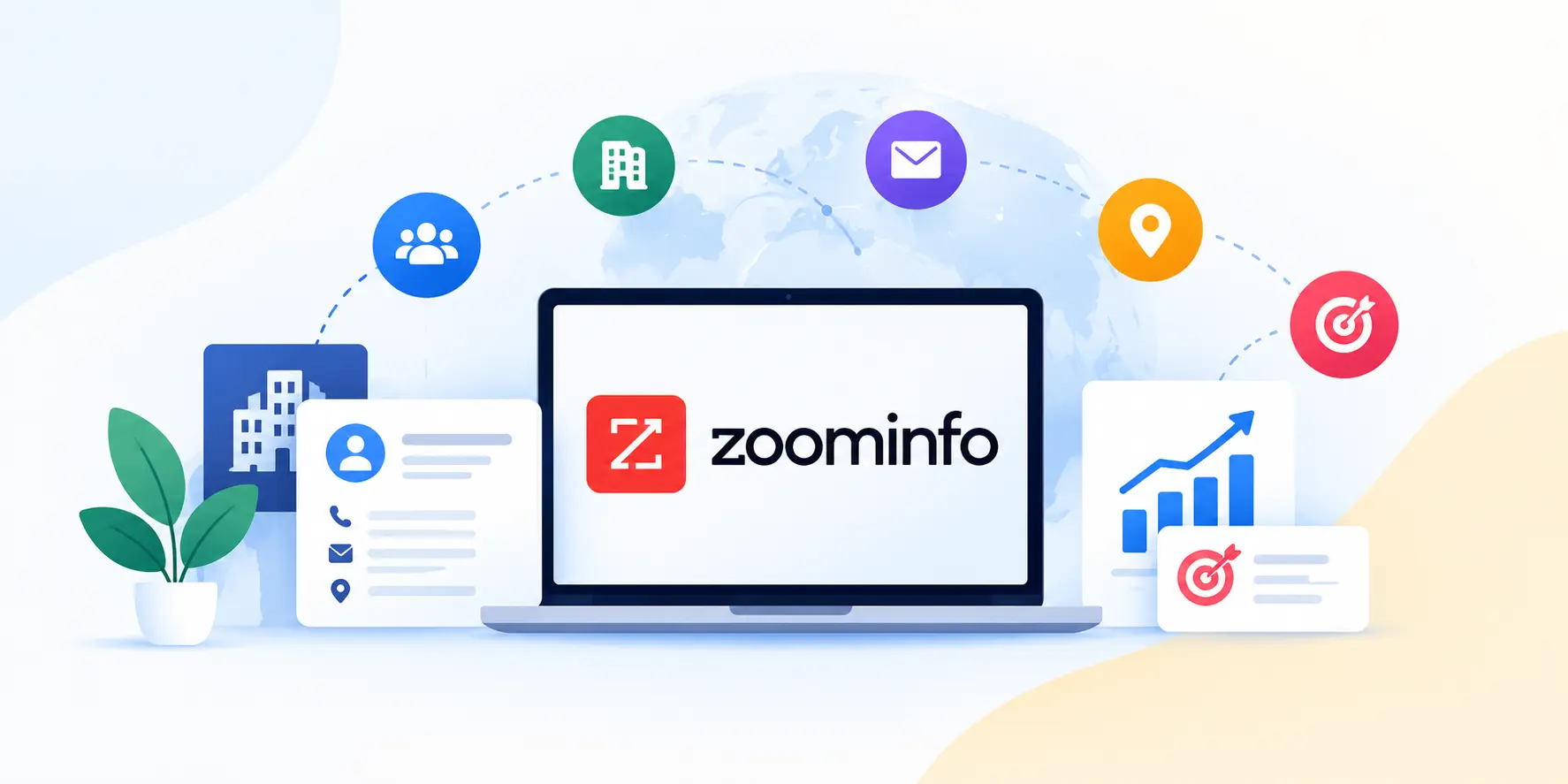
Incomplete or outdated customer information can create problems for sales and marketing teams. Missing job titles, inaccurate company details, and duplicate records can reduce productivity and affect campaign performance.
ZoomInfo offers data enrichment and operational capabilities that help organizations improve business records and manage information across their systems. Depending on the products and integrations selected, teams can automate tasks such as updating records, routing leads, and organizing prospect information.
These capabilities can reduce repetitive administrative work and help employees spend more time on activities that contribute directly to business growth.
Sales representatives often spend considerable time identifying prospects and gathering information before contacting them. ZoomInfo can simplify this process by bringing relevant business intelligence into one workflow.
With easier access to prospect information, sales teams can prioritize outreach, prepare for conversations, and focus on opportunities that align with their objectives.
Effective marketing depends on reaching the right audience with the right message. ZoomInfo helps businesses refine audience selection using company information and available buying signals.
More precise targeting can support personalized campaigns, stronger sales and marketing alignment, and more efficient use of marketing resources. Actual results depend on data quality, campaign execution, and the relevance of the offer.
Business intelligence can help organizations understand their target markets, identify potential opportunities, and prioritize accounts. ZoomInfo provides information that can support territory planning, prospect segmentation, and go-to-market strategy development.
When combined with internal sales data and performance metrics, these insights can help managers make more informed decisions.
ZoomInfo can be useful for B2B sales teams, demand-generation specialists, marketing professionals, revenue operations managers, and recruitment teams. Companies that rely on outbound sales, targeted account acquisition, or structured prospect research may find its capabilities particularly valuable.
However, organizations should evaluate pricing, available features, integration requirements, data coverage, and expected return on investment before choosing a subscription. Businesses should also review applicable privacy regulations and respect contact preferences when using professional data for outreach.
ZoomInfo offers businesses a practical way to combine B2B data, sales intelligence, marketing insights, and workflow automation. By helping teams identify suitable prospects, improve customer records, and prioritize opportunities, the platform can support more organized and data-driven growth strategies.
For organizations seeking to improve lead generation and sales efficiency, ZoomInfo may be a valuable addition to their technology stack. The greatest benefits come when teams use reliable data responsibly, integrate insights into existing workflows, and consistently measure results against clear business objectives.

© 2026. All rights reserved by Saasutility.





No Comments