How to Choose the Right AI Writing Tool for Your Workflow
 Krati Athwani

 Krati Athwani
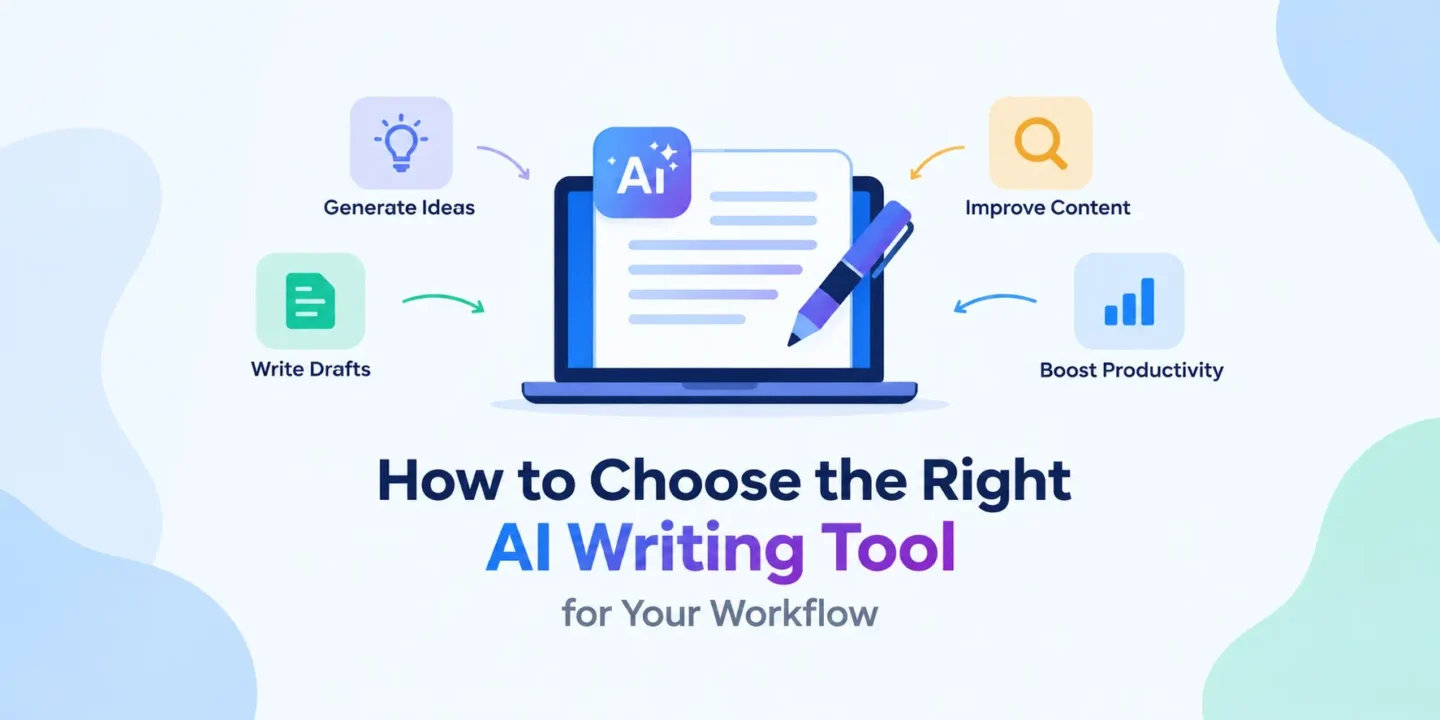
AI writing tools have become valuable resources for bloggers, marketers, business owners, and content creators. They can help generate ideas, write drafts, improve grammar, and create content more efficiently. However, with so many options available, choosing the right tool can be challenging.
The best AI writing tool is not necessarily the most popular or expensive one. It is the one that fits your workflow, meets your content requirements, and helps you produce high-quality content with less effort.
In this guide, we will explore the key factors to consider when choosing an AI writing tool for your needs.
Before comparing AI writing tools, determine what type of content you create regularly. Different tools specialize in different writing tasks.
For example, bloggers may need tools for long-form articles, outlines, and SEO optimization. Social media marketers may prefer tools that generate captions, advertisements, and short posts. Businesses might need AI tools for emails, product descriptions, and website copy.
Create a list of your most frequent writing tasks. This will help you narrow down your options and avoid paying for features you rarely use.
Content quality should be one of your top priorities. A good AI writing tool produces clear, relevant, and natural-sounding text that requires minimal editing.
Test potential tools with the same prompt and compare their results. Look for logical structure, accurate information, appropriate tone, and useful examples.
Remember that AI-generated content can contain factual errors, repetitive phrases, or generic explanations. Always review the output, verify important claims, and add your own experience and insights before publishing.
If you publish content to attract organic traffic, SEO features can make a significant difference. Some AI writing platforms provide keyword suggestions, content briefs, heading recommendations, and optimization feedback.
Look for tools that help you understand search intent and organize information around your target audience’s needs. However, avoid relying entirely on automated keyword suggestions or optimization scores.
Useful content should answer readers’ questions naturally. Choose a tool that supports your SEO process rather than encouraging keyword stuffing or repetitive writing.
An AI writing tool should fit naturally into your existing workflow. If you regularly use Google Docs, WordPress, or project management platforms, check whether the tool supports those applications or offers convenient export options.
A simple interface, reusable templates, and effective editing features can save time. Consider how easily you can move from research and outlining to drafting, editing, and publishing.
The fewer unnecessary steps your workflow requires, the easier it becomes to maintain consistent content production.

AI writing tools offer different pricing models, including free plans, monthly subscriptions, and usage-based options.
Start with a free plan or trial whenever possible. Test whether the available features meet your requirements before committing to a paid subscription.
Compare word limits, generation credits, collaboration options, plagiarism-checking features, and access to advanced models. Also consider how frequently you will use the tool.
For occasional writing, a free tool may be sufficient. Teams producing content regularly may benefit from a paid platform with collaboration and workflow management features.
If you work with confidential business information, customer details, or unpublished content, review the tool’s privacy policy and data-handling practices.
Check how your inputs are stored, whether they may be used to improve AI models, and what controls are available for managing your data.
Reliable performance, clear usage policies, and responsive customer support are also important, particularly when AI writing is part of your daily business operations.
Rather than choosing a tool based on advertising alone, conduct a practical test. Select two or three options and give each the same real-world writing task.
Compare the quality of the results, editing time, ease of use, and overall cost. Consider how much work is required to turn the generated draft into publishable content.
The best option is the one that consistently improves your process without compromising quality.
Choosing the right AI writing tool starts with understanding your content needs, budget, and existing workflow. Evaluate writing quality, SEO capabilities, integrations, privacy, and pricing before making a decision.
Most importantly, treat AI as a writing assistant rather than a replacement for human judgment. Combining AI-generated drafts with original insights, fact-checking, and thoughtful editing can help you create useful content more efficiently.
Take time to test different tools and choose the one that delivers the greatest practical value for your workflow.

© 2026. All rights reserved by Saasutility.





No Comments