CRM vs ERP: Understanding the Key Differences
 Krati Athwani
 Krati Athwani
Technology plays an important role in improving efficiency, managing customer relations and daily business processes of companies today. CRM and ERP software solutions are both widely used by businesses to assist in their growth. However, these types of systems solve different problems and meet separate objectives.
Having knowledge about both systems will enable organizations to select the best option for their business requirements and long-term objectives.
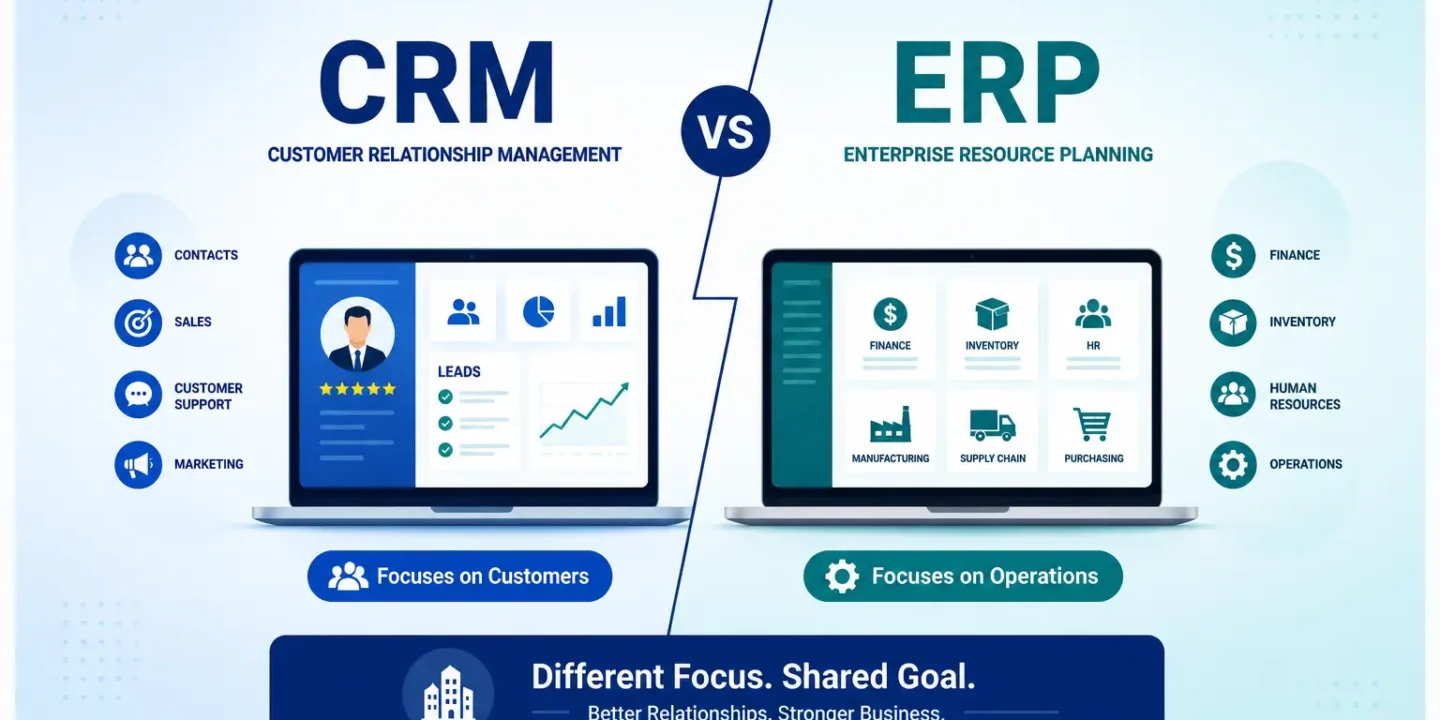
Customer relationship management is a type of software designed for businesses to handle their interactions with customers. CRM has been developed to provide improvements to all of the various areas of customer interactions including improving customer relationships, increasing sales, and increasing levels of service.
Using CRM, sales representatives are able to keep track of sales leads, follow up with potential customers after the sale, and make it easier to close a sale.
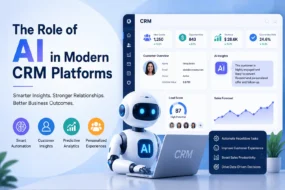
Some of the latest CRM software platforms operate with the integration of algorithms, data and AI to provide companies with automated sales processes and customer experiences that have been personalized for each customer. For more information on these new trends in CRM technologies, click on the below given guide to:
The Role of AI in the Current CRM Technologies.
Enterprise resource planning is a business software which operates multiple internal business processes into one system. Unlike, CRM ERP manages core business operations such as finance, accounting, inventory, manufacturing, supply chain and human resources.
With an ERP system, organizations are able to share data in real time. The ability to centralize business information allows companies to make quicker, better informed decisions than if that information was stored in many different locations.
ERP systems can also help medium and large sized businesses that operate multiple departments with multiple complicated workflows, coordinate all of these efforts.
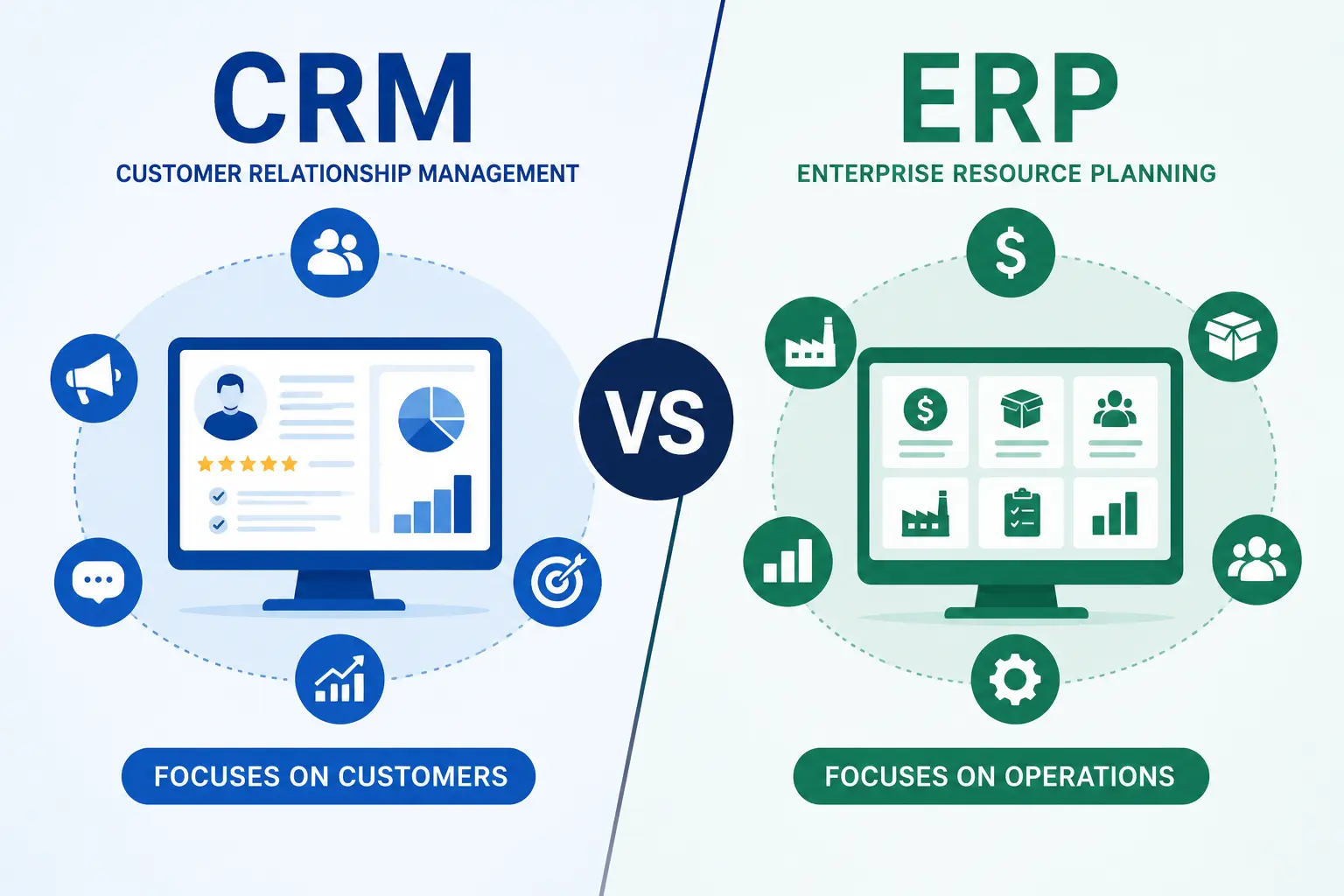
CRM is all about managing customer relationships, improving sales performance and enhancing customer satisfaction.
ERP software helps businesses manage internal operations including finance, inventory and resources.
Typically, CRM is used by sales, marketing and support teams.
The main users of ERP are Finance departments, Operations Managers, HR teams, Procurement staff and Company Leadership.
CRM is about increasing revenue by acquiring new customers and retaining existing customers.
ERP is intended to enhance all aspects of an organization’s business operations, decrease expenditures and enhance many of the organization’s business procedures.
CRM holds customer-related information like, but not limited to, contact information, customer transactions, communications with customers and sales potential.
ERP systems store data for the entire company, such as financial data, inventory levels, payroll data, production schedules and supplier data.
The answer is Yes; a lot of companies have combined their CRM and ERP software to get a full picture of both their customers and how they do business internally.
For example, if a salesperson closes a sale in a CRM system, that sale can automatically update the inventory in ERP software, generate the invoice from the sale, process the payment from the customer, and schedule the product delivery. All of that is done without any manual data entry or chance of incorrect information and creates better collaboration between personnel within each department.
Businesses that use both systems benefit from greater levels of productivity, improved customer service, and increased accuracy of reporting.
Both CRM and ERP are important tools for business management, but they address different problems. CRM allows companies to build better customer relationships, and ERP improves efficiency of businesses internal operations and resource management.
The selection of an appropriate solution should be determined by your business’ current requirements, anticipated future expansion and level of operational complexity. In addition, as more businesses accelerate their journey to digital transformation, integrated CRM and ERP solutions can drive a more integrated and efficient business model, enabling an organization that is ready to thrive long into the future.
Also Read:

© 2026. All rights reserved by Saasutility.


No Comments