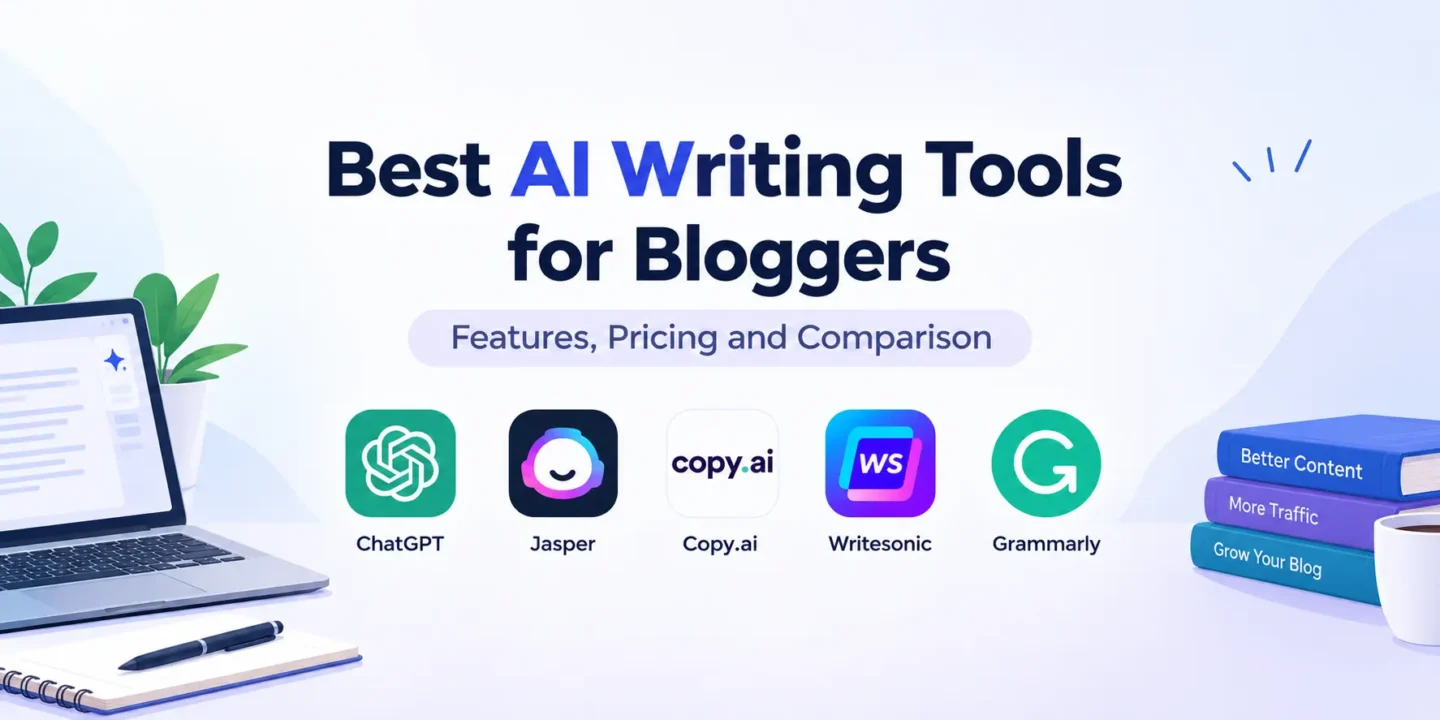
Best AI Writing Tools for Bloggers: Features, Pricing and Comparison
 Krati Athwani

 Krati Athwani
AI writing tools have become valuable resources for bloggers who want to create high-quality content, save time, and improve their productivity. From generating blog ideas to optimizing articles for search engines, these tools can simplify many stages of content creation. However, choosing the right tool depends on your budget, writing style, and blogging goals.
In this guide, we compare some of the best AI writing tools for bloggers, including their features, pricing considerations, and ideal use cases.
ChatGPT is a versatile AI writing assistant that helps bloggers brainstorm topics, create outlines, draft articles, rewrite paragraphs, and generate social media content.
Key features:
Pricing: Free plan available; paid plans offer additional features and higher usage limits.
Best for: Bloggers who need an all-purpose writing assistant for everyday content creation.
Jasper is an AI content platform designed primarily for marketing teams, businesses, and professional content creators. It can help maintain a consistent brand voice across multiple articles and marketing campaigns.
Key features:
Pricing: Paid plans; check the official website for current prices and plan availability.
Best for: Professional bloggers, agencies, and businesses producing content at scale.
Copy.ai focuses on AI-powered content creation and marketing workflows. Bloggers can use it to generate article ideas, introductions, promotional copy, and content for multiple channels.
Key features:
Pricing: Plan availability and usage limits vary; consult the official pricing page.
Best for: Bloggers who combine articles with email marketing, social media, and promotional campaigns.
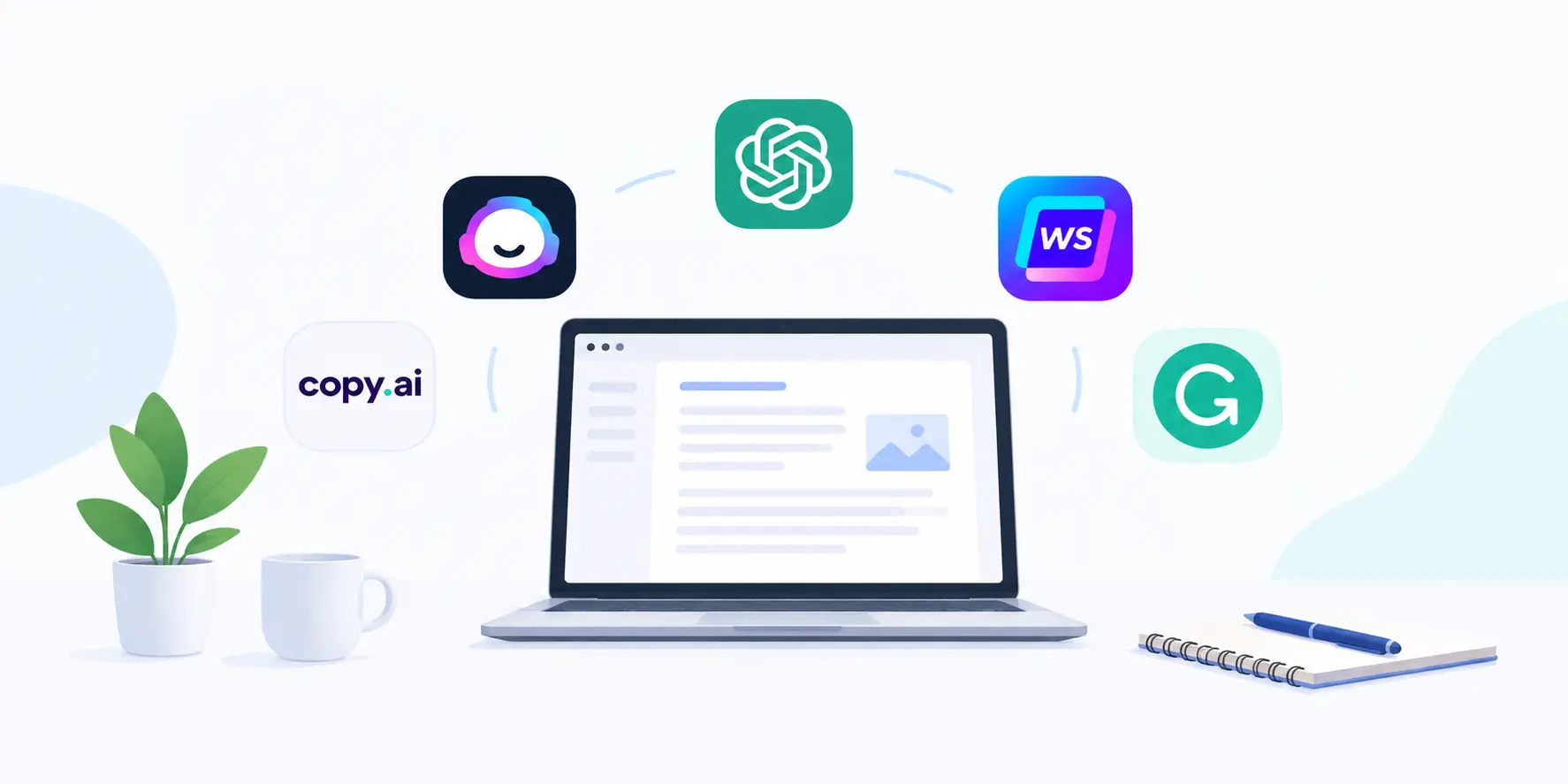
Writesonic offers AI writing capabilities alongside features designed for SEO content and online visibility. Depending on the selected plan, it can support research, drafting, and content optimization workflows.
Key features:
Pricing: Free access or trials may vary; paid plans depend on current offerings.
Best for: Bloggers who want writing assistance combined with SEO-oriented features.
Grammarly focuses on improving writing quality rather than generating complete articles from scratch. It helps bloggers refine grammar, clarity, tone, and readability.
Key features:
Pricing: Free plan available, with additional features offered through paid plans.
Best for: Bloggers who want polished, professional, and easy-to-read articles.
| Tool | Main strength | Ideal user |
| ChatGPT | Flexible content creation | All types of bloggers |
| Jasper | Brand consistency | Marketing teams |
| Copy.ai | Marketing workflows | Content marketers |
| Writesonic | SEO-focused writing | SEO bloggers |
| Grammarly | Editing and proofreading | Writers seeking polished content |
Pricing and feature availability can change, so check each provider’s official website before subscribing.
Before selecting a tool, consider your content requirements, budget, and publishing frequency. Beginners may prefer a free plan, while professional bloggers might benefit from advanced workflows, brand voice controls, or SEO features.
It is also important to review the accuracy of AI-generated information. Always verify facts, add relevant examples, and edit drafts to reflect your expertise and unique perspective.
AI-generated content should provide genuine value to readers rather than simply filling a page with keywords. For better SEO results, focus on search intent, helpful information, clear headings, and relevant internal links.
The best AI writing tool for bloggers depends on your specific needs. ChatGPT is a flexible option for brainstorming and drafting, Jasper supports brand-focused content production, Copy.ai helps with marketing workflows, Writesonic offers SEO-oriented capabilities, and Grammarly improves writing quality.
Ultimately, AI works best as a writing assistant rather than a replacement for human judgment. Combining AI efficiency with original insights, careful editing, and reliable research can help bloggers publish better content consistently.

© 2026. All rights reserved by Saasutility.



No Comments