
This guide helps businesses choose the right CRM by outlining key steps—understanding CRM functions, defining needs, budgeting, testing usability, ensuring scalability, integration, security, and support—for confident, growth-driven decisions.
In the present competitive world of business, relationships of customers are all. Regardless of whether you are starting a business or an already existing organization, the way in which you handle, examine and foster the relationships with your customers can define your future path. Customer Relationship Management (CRM) software comes in at that point. However, there are hundreds of CRM tools out there in the market with each having their own individual advantages, where do you start when trying to select the correct CRM tool to use in your business?
This guide will take you through step-by-step, which will enable you to make a confident decision.
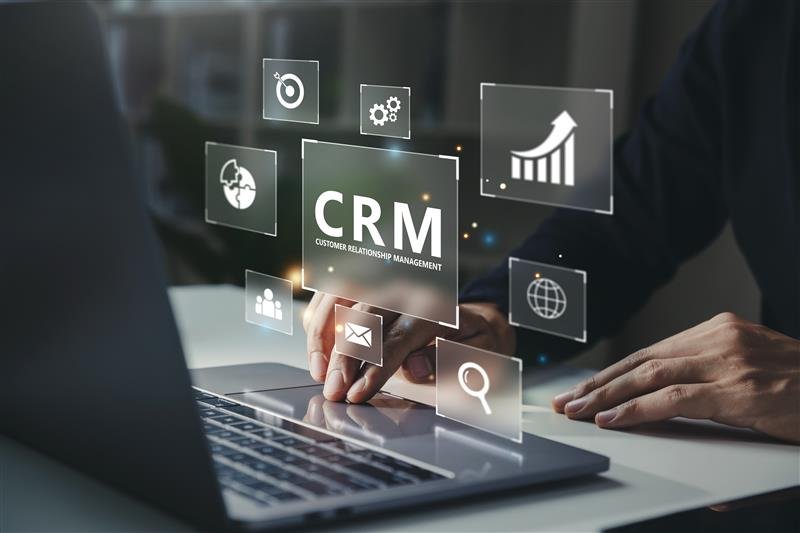
It is imperative to know what CRM software is supposed to do before entering the world of comparison. Fundamentally, CRM is a centralized store of customer information, an automated communication tool, and an analytical tool of your sales and marketing activities.
Key functions include:
Contact Management: Customer information, history and preferences.
Automation in Sales: Monitoring leads, pipelines and conversions.
Marketing Automation: Dealing with campaigns, emails and segmentation of the audience.
Customer Support: Ticket Recording, Response, and Satisfaction.
Analytics and Reporting: Providing the insights to enhance the decision-making.
As soon as you understand all these basics, it is possible to align CRM capabilities with your business goals.
There is no business like another and so is the CRM requirement. Begin by analyzing your existing pain points. Ask yourself:
Are we losing leads because of bad follow up?
Are we not able to visually see our sales pipeline?
Do you have an environment that is decentralized in customer interactions?
Should we be marketing automating and marketing analytics, or should we be tracking sales?
Remake a clear list of must have features and nice to have features. An example is that a small company may want a product with ease of use and low cost, whereas a bigger company may need imported high-tech automation, integration, and reporting.
CRM must increase with your business, not only suit its current size. Therefore, select one that will be able to grow and adjust as your business grows.
CRMs are available in a vast variety of pricing schemes- free basic to enterprise level at thousands per month. In determining a budget, include the initial expenses, and long term expenses including:
User licenses
Add-ons or integrations
Training and support
Data migration fees
Startups should use such free CRM as HubSpot CRM that can provide all the necessary features. But as you expand your business, you may exceed the free offerings and require advanced versions such as Zoho CRM, Pipedrive or Salesforce, based on your requirements.
You must always make sure that the price you pay is worth it. An investment in the appropriate system is usually rewarded by a little more investment in a higher productivity and efficiency in sales.
Even the most full-fledged CRM will not work without any outcomes in case your staff struggles to use it. High learning curve may lead to frustration, low adoption and eventually, loss of money.
In considering CRMs, consider:
User Interface (UI): intuitive and easy to use?
Onboarding/Training: Does the vendor have tutorials or support?
Mobile Accessibility: Does your team have it at their fingertips?
Ask the team to have a demo or free trial of the CRM before they can commit. When your sales and marketing departments accept it with little effort, it is a good indicator that you are on the right path.
Your CRM should reflect your workflows—not the other way around. Look for solutions that let you:
Customize fields, dashboards, and reports
Create tailored automation workflows
Add or remove modules as needed
Scalability is equally vital. As your customer base and team grow, your CRM should handle more users, data, and integrations without slowing down. Platforms like Salesforce and HubSpot are renowned for their scalability and flexibility, while options like Zoho CRM or Freshsales cater to small and mid-sized businesses with affordable upgrade paths.
Your CRM shouldn’t operate in isolation. It should integrate seamlessly with the tools you already use—email, marketing automation, accounting, and analytics software.
Common integrations include:
Email Clients: Gmail, Outlook
Marketing Tools: Mailchimp, ActiveCampaign
E-commerce Platforms: Shopify, WooCommerce
Project Management Tools: Trello, Asana
Communication Platforms: Slack, Microsoft Teams
Integration ensures smooth data flow and eliminates manual work, helping your teams collaborate more efficiently.
Customer data is one of your most valuable assets—and protecting it is non-negotiable. Ensure your CRM adheres to global security standards like GDPR, ISO, or SOC 2 compliance.
Look for these key security features:
Data encryption
Role-based access controls
Two-factor authentication (2FA)
Regular backups and audits
A trustworthy CRM vendor should be transparent about how they handle and store your data.
Even the best CRM software occasionally faces technical issues or user confusion. Reliable support can make a huge difference. Check what kind of support options the vendor provides—email, chat, phone, or dedicated account managers.
Also, consider the size of the user community. A large, active community often means you’ll find answers, best practices, and tutorials easily.
Finally, never skip the trial phase. Most CRM providers offer free trials ranging from 14 to 30 days. Use this period to test real-world workflows, add team members, and see how the CRM handles your data and processes.
During this time, evaluate performance, usability, and team feedback. If everyone feels confident using it, that’s a strong indicator of long-term success.
Choosing the right CRM software isn’t just about picking a popular brand—it’s about finding a tool that aligns with your business goals, team structure, and growth plans. Take the time to analyze your needs, test multiple options, and involve your team in the decision-making process.
A well-chosen CRM becomes more than just a system—it becomes the heart of your business operations, empowering you to build stronger relationships, boost sales, and make data-driven decisions with confidence.

© 2025. All rights reserved by Saasutility.




No Comments