
This blog compares free and paid CRM software, highlighting their pros, cons, and key differences to help businesses choose the right CRM based on size, goals, budget, and scalability.
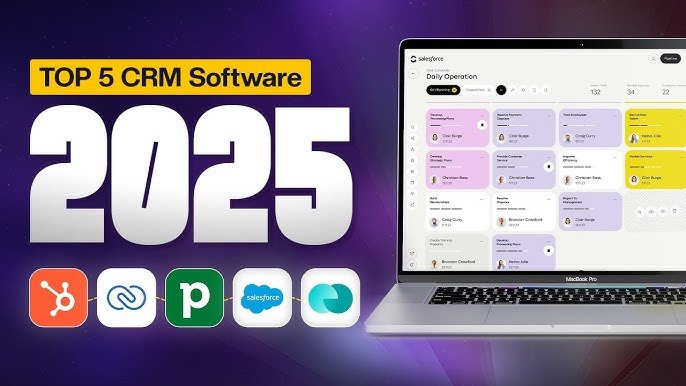
Customer relationship management is extremely important to business growth with the current competitive business world. Customer Relationship Management (CRM) software can be a life-saver to a startup, a small business, or an established enterprise. A CRM system assists in the management of customer information, optimized communications, automated operations and eventually enhanced customer satisfaction.
However, the biggest challenge that most businesses encounter once they decide on the adoption of a CRM revolves around the issue of whether to use a free CRM or paid CRM software. Each of them has its advantages and deficiencies, and the adoption of one or the other option depends mostly on your business size, objectives and financial means.
The differences can be broken down and assist you in determining which of the options makes the most sense to your company.
The free CRM software is created to offer the necessary CRM functionalities, free of charge subscriptions. Lots of well-known CRM systems such as HubSpot, Zoho, Freshsales provide free-of-charge versions that are targeted mostly to startups and small companies.
Such platforms typically involve rudimentary tools like:
Contact management
Lead tracking
Email marketing integration.
Task scheduling
Basic reporting
The primary benefit is clear that there is no need to pay a penny. This makes it an excellent place of entry to business that is just coming out or trying the waters of digital customer management.
Nonetheless, free CRM tools are usually limited to aspects like storage limitation, fewer automation capabilities and scalability.
Cost-Effective for Startups
When you are operating a small business or a new start-up, then you must ensure that the costs are kept low. Free CRM provides you with the right to use the rudimentary features without initial investment in it and allow you to concentrate on customer relations without straining your budget.
Ease of Use
Free CRMs are sometimes simple in nature. It takes little to no time to get started and one does not require extensive technical expertise or training.
Good for Testing the Waters
This is because when you have not used a CRM before, it is best to start using a free version to know what your business really requires. After getting beyond the simple equipment, it is much more straightforward to upgrade with the top priorities.
No Long-Term Commitment
Being free, you can navigate and change tools at any time and do not be afraid of subscriptions being canceled and losing money.
Limited Features and Users
Free CRMs usually limit the data, number of contacts or number of users. You can very easily reach such limits as your team or customer base expands.
Restricted Customization
Free editions tend to be less customizable, and hence it is more difficult to adapt workflows, reports, or dashboards to your business requirements.
No or Minimal Automation
One of the largest advantages of CRM software is automation, which free versions do not have. Information may have to be entered or traced manually, and this may be time-consuming.
Limited Support
CRM users with a free version can expect very little or no support. On the event of technical problem, you might be required to use forums or documentation.
Demystifying Paid CRM Software.
Paid CRM software opens all the features of scalability, automation, analytics, and the integration with other tools. They include Salesforce, HubSpot Premium, Pipedrive and Zoho CRM Plus.
Paid CRMs should be chosen in case of expanding the business that should have more control over the data, enhanced marketing opportunities and more insights. They are able to manage bigger teams, complicated sales process and multi-channel interaction with customers.
Professionalinspirations and Integrations.
Paid CRMs come with AI-based insights and sales forecasting, as well as workflow automation and advanced analytics. They also combine well with third-party applications such as the ERP system, email system, and the marketing software.
Scalability and Customization.
Since your company will keep expanding, your paid CRM can grow with you. You are able to customize modules, create new users and transform workflows to your distinctive business typology.
Enhanced Security
Paid CRMs are also equipped with high data protection features such as encryption, access control and data protection laws compliance, and your customer data is never compromised.
Quality Support and Training.
Free (Premium) CRM users get priority service, onboarding, and account managers – so you can use your investment to the fullest.
Cost Factor
Of course, the largest negative point is the price. Depending on the vendor/plan, subscription fees may be 1,000 to 10,000 (or beyond) per user per month. This is quickly accumulating to small businesses.
Complexity
The steep learning curve is usually associated with paid CRMs, which feature more features. It is possible that your team can require time and training to operate the system productively.
Overkill for Small Teams
The advanced features of a paid CRM may not be utilized in a business with a small customer base or with a simple business operation, and this may be regarded as a waste of money.
Comparison of Free and Paid CRM: Comparative Look.
Feature Free CRM Paid CRM
Cost ₹0 ₹1,000–₹10,000/user/month
User Limit Usually limited Scalable.
Customization Minimal Extensive.
Advanced or none Basic or none
Community only 24/7 premium support.
Best Duration Startups and small businesses Growing or enterprise-level businesses.
What to Select and How to Select the right one to your business.
Whether to use free or paid CRM software is a choice that is dictated by the stage of your business, your objectives and your expansion strategies.
Go for a Free CRM if:
You are a small team or startup that has a small budget.
You want to experiment CRM capabilities and not invest.
Your business is not difficult and does not need complicated automation.
Opt for a Paid CRM if:
You are climbing quickly, or you have a huge sales force.
You require detailed reporting, artificial intelligence or automation of workflow.
You seek committed help and compliance of data security.
Free and paid CRM software do not go away in the current digital ecosystem. This is a decision that would be the right one based on your present requirements and how you wish to become in the future. Most of the small business establishments will need nothing more than a free CRM program such as HubSpot or Zoho to create a robust customer base. However, when you start to grow and have more complicated processes, a paid CRM can provide you with the automation, analytics and scalability you need to take your business to the next level.
Finally, the most appropriate CRM is not the one with the highest functionality rather the one that suits your business best.

© 2025. All rights reserved by Saasutility.



No Comments