AI Automation vs. Traditional Automation: Which Is Better for Businesses?
 Sumit Sagar


 Sumit Sagar
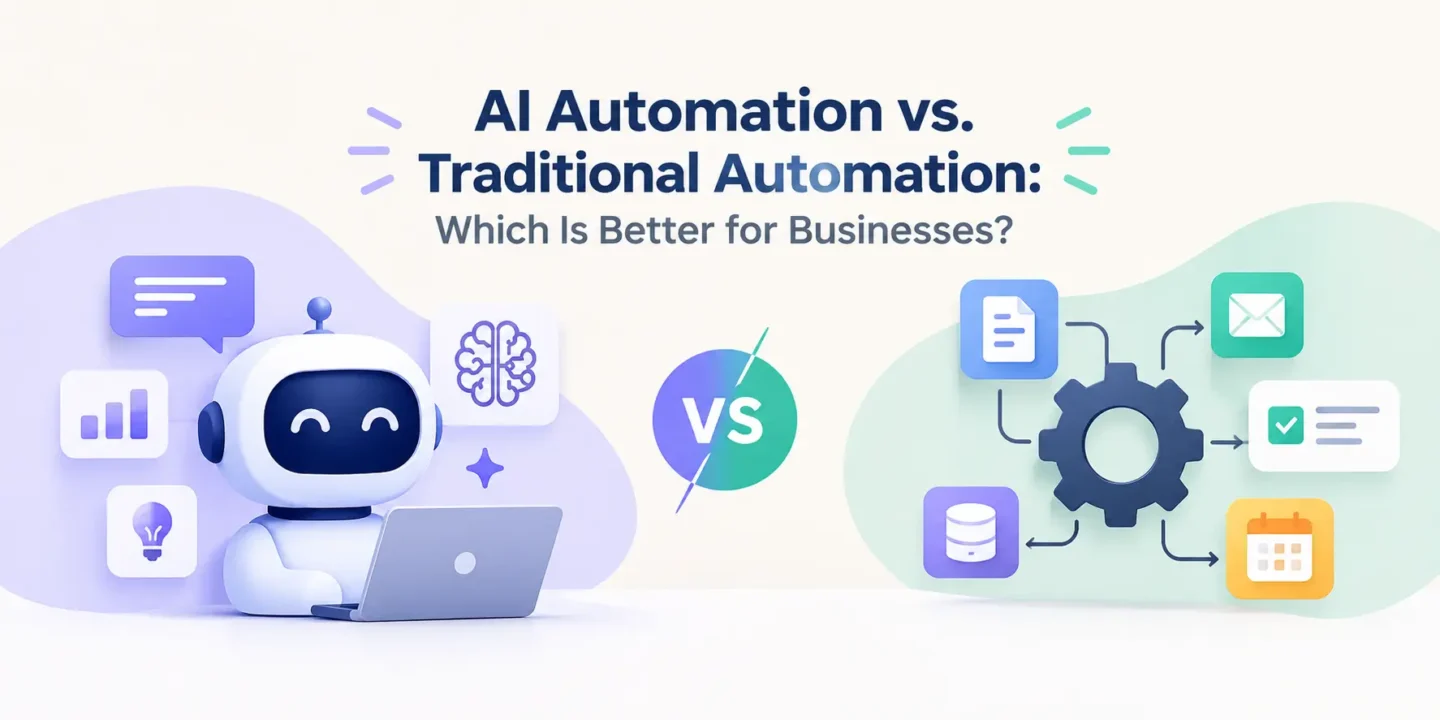
Businesses are constantly looking for ways to save time, reduce costs, and improve productivity. Automation has become an important part of achieving these goals by reducing repetitive tasks and helping teams work more efficiently. However, with the rise of artificial intelligence (AI), businesses now have two main options: traditional automation and AI automation.
Although both approaches help streamline workflows, they work differently and serve different purposes. Understanding their differences can help businesses choose the right solution for their needs.
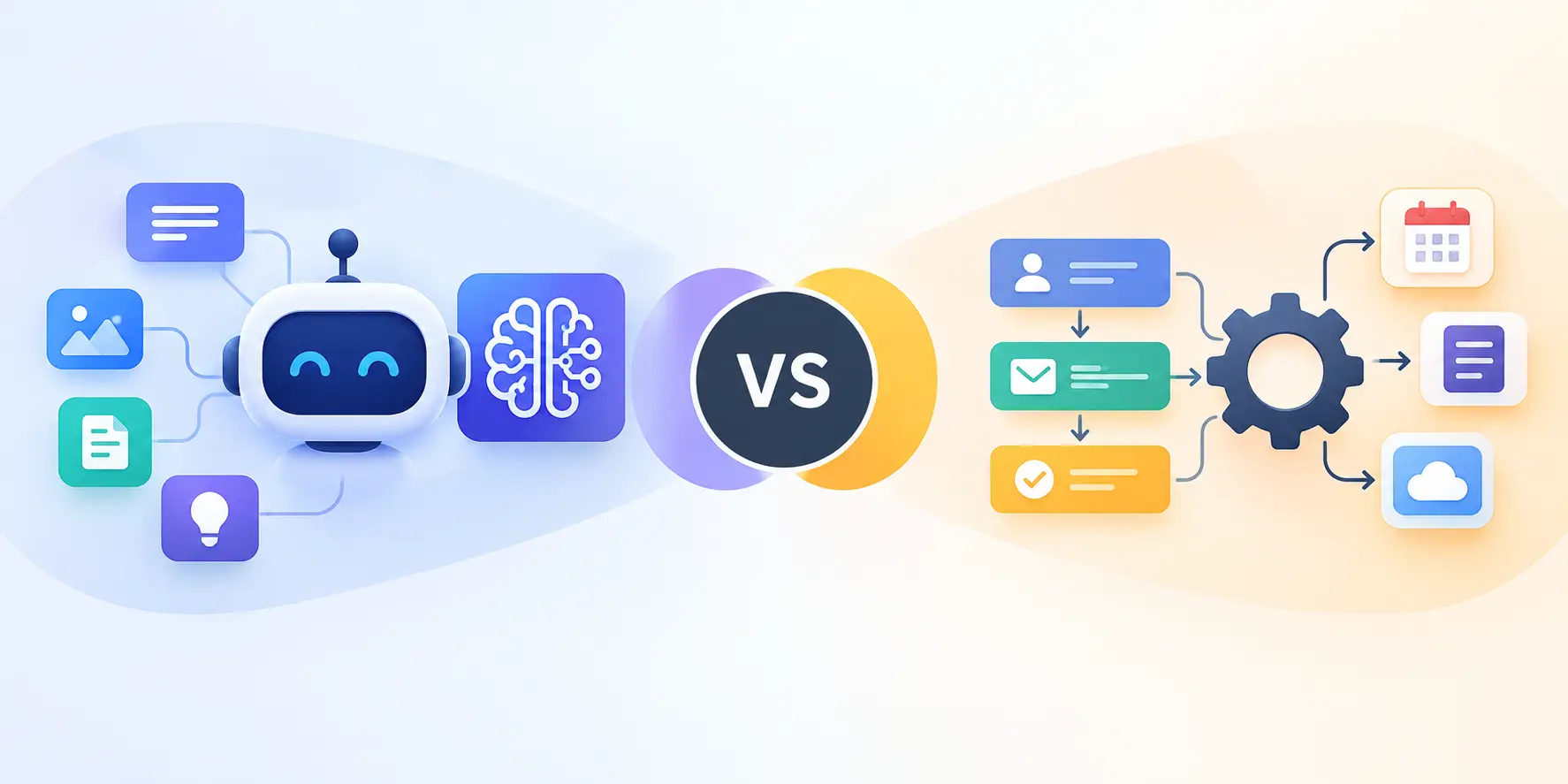
Traditional automation uses predefined rules and instructions to perform specific tasks automatically. It follows a structured process and produces predictable results whenever the same conditions occur.
For example, a business might use traditional automation to send an email whenever someone fills out a contact form. Similarly, accounting software can automatically generate invoices after a purchase, while project management tools can assign tasks based on predefined rules.
Traditional automation works best when tasks are repetitive, structured, and follow consistent patterns.
Key benefits of traditional automation include:
However, traditional automation has limitations. It generally cannot interpret complex information, adapt to unexpected situations, or make decisions beyond its programmed rules without additional logic.
AI automation combines automation technologies with artificial intelligence to handle tasks that require understanding, prediction, or decision-making.
Unlike traditional automation, AI-powered systems can analyze unstructured information, recognize patterns, interpret natural language, and generate responses. Depending on the technology used, some systems can also improve their performance through training or feedback.
For example, an AI-powered customer support tool can analyze a customer’s message, identify the problem, and suggest an appropriate response. AI tools can also summarize documents, categorize incoming emails, analyze customer feedback, and help sales teams prioritize potential leads.
Key benefits of AI automation include:
However, AI automation also comes with challenges. Results may be inaccurate, implementation can require additional investment, and businesses must consider data privacy, security, and human oversight.
Although both approaches improve efficiency, several differences affect which option businesses should choose.
| Feature | Traditional Automation | AI Automation |
|---|---|---|
| Working method | Follows predefined rules | Uses AI to interpret information and support decisions |
| Best for | Repetitive, structured tasks | Complex tasks involving language, patterns, or variability |
| Flexibility | Limited to programmed workflows | Can handle some unfamiliar situations |
| Predictability | Usually highly predictable | Results can vary and require validation |
| Implementation | Often simpler | May require more planning and integration |
| Examples | Automatic invoices and scheduled emails | Intelligent chatbots and document analysis |
The main distinction is that traditional automation follows instructions, while AI automation can interpret information and handle certain tasks that require more flexible reasoning.
The right choice depends on a company’s goals, budget, and existing processes.
Traditional automation is better when:
For example, an online store can use traditional automation to send order confirmations, update inventory records, and notify customers when their packages are shipped.
AI automation is better when:
For example, a SaaS company can use AI to categorize customer support tickets, summarize conversations, and recommend solutions to support agents.
Importantly, AI-generated decisions should be reviewed when mistakes could create significant financial, legal, or customer-related consequences.
Yes. In many cases, combining both approaches delivers better results than relying on either one alone.
Traditional automation can manage predictable workflow steps, while AI handles tasks that require interpretation.
For example, a business could use AI to analyze incoming customer emails and identify their purpose. Traditional automation could then route each email to the appropriate department, create a support ticket, and notify the assigned employee.
This approach combines the flexibility of AI with the consistency of rule-based workflows.
Businesses can explore workflow automation platforms and AI-powered SaaS tools to build these processes. Before implementation, they should evaluate integration options, pricing, security requirements, and the amount of human supervision needed.
AI automation and traditional automation both help businesses improve productivity, but neither is universally better. Traditional automation remains an excellent choice for repetitive, rule-based tasks that require consistent results. AI automation is more suitable for processes involving complex information, language understanding, and flexible decision-making.
For many businesses, the best strategy is to combine both technologies. By automating predictable tasks with traditional tools and using AI where intelligent processing adds value, companies can build efficient workflows without introducing unnecessary complexity.
Ultimately, businesses should begin by identifying their biggest operational challenges, selecting the appropriate automation approach, and measuring the results before expanding their investment.
© 2026. All rights reserved by Saasutility.






No Comments